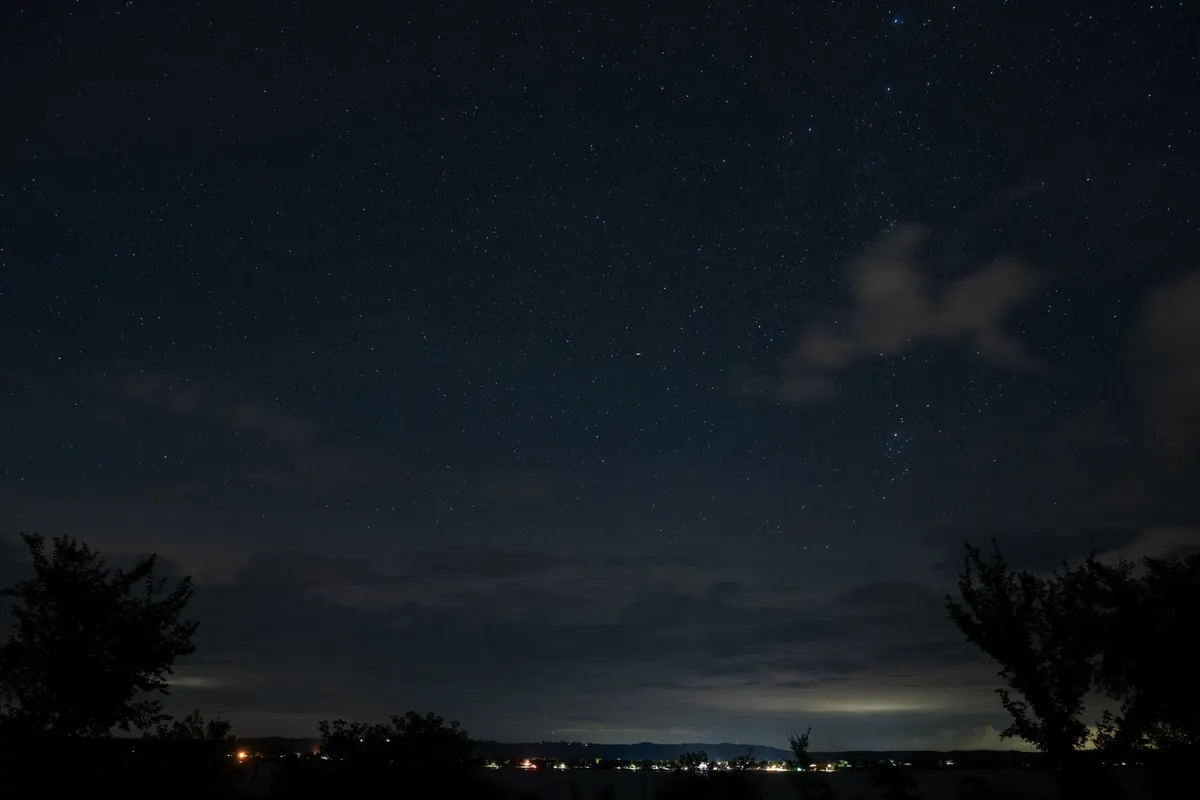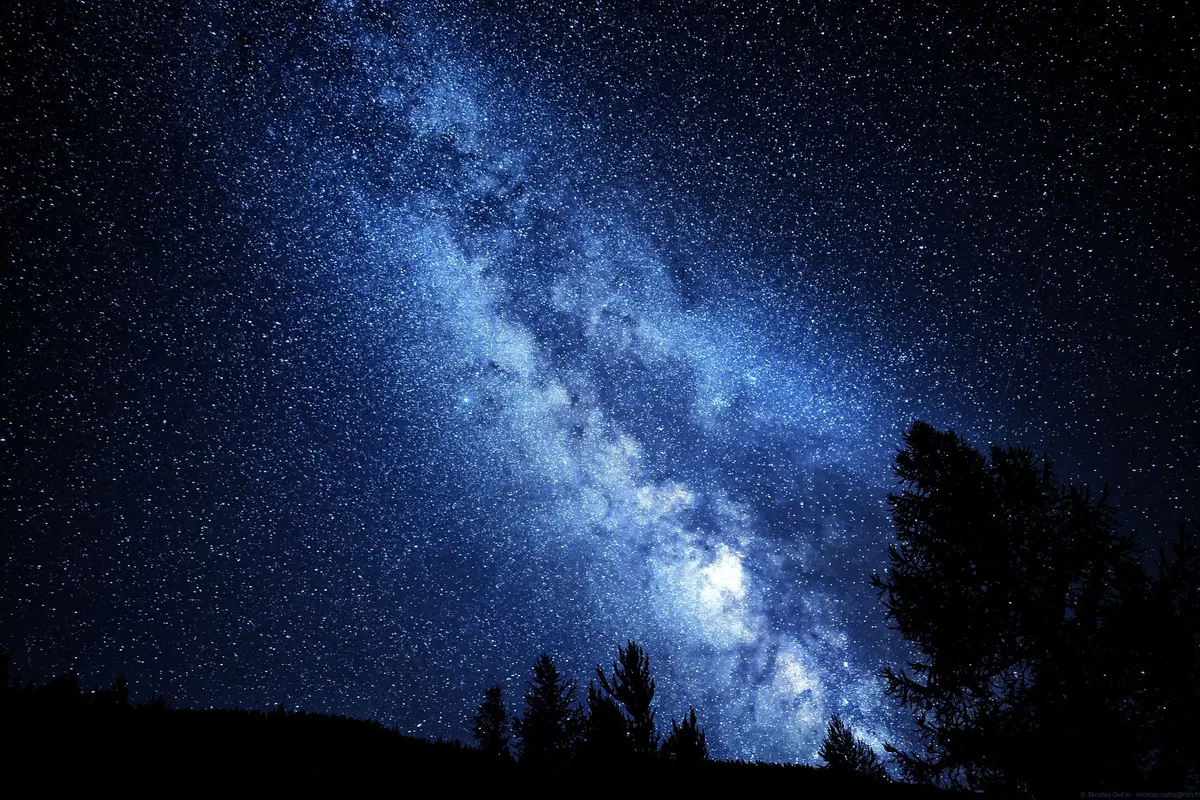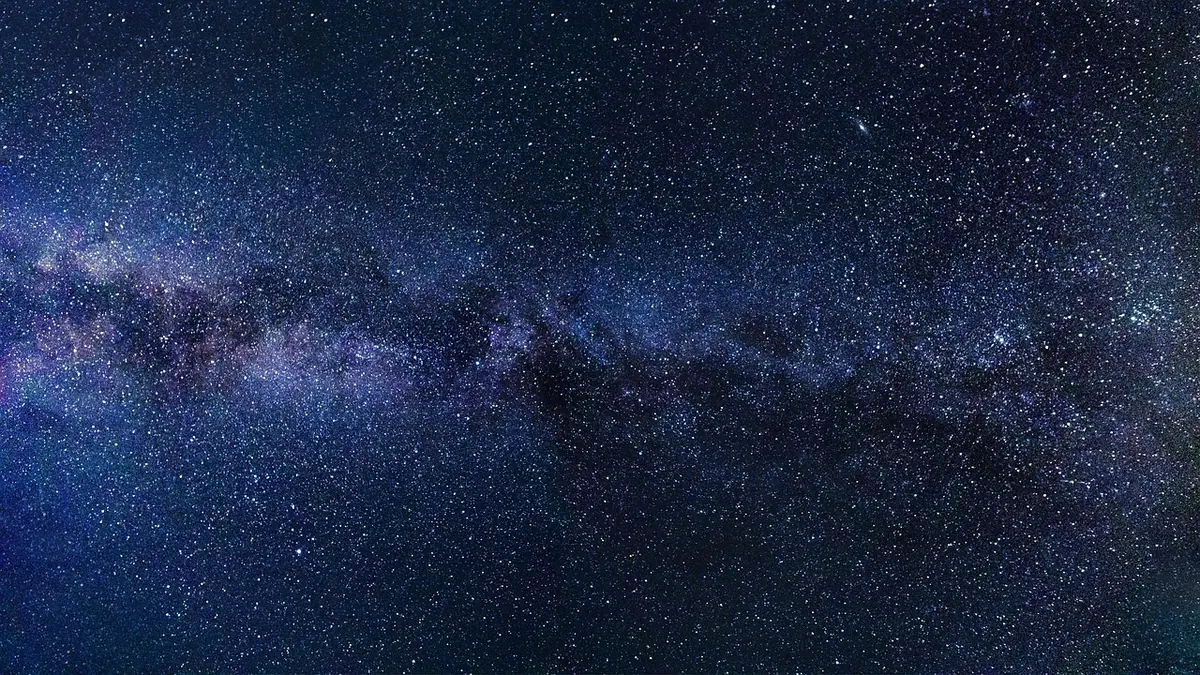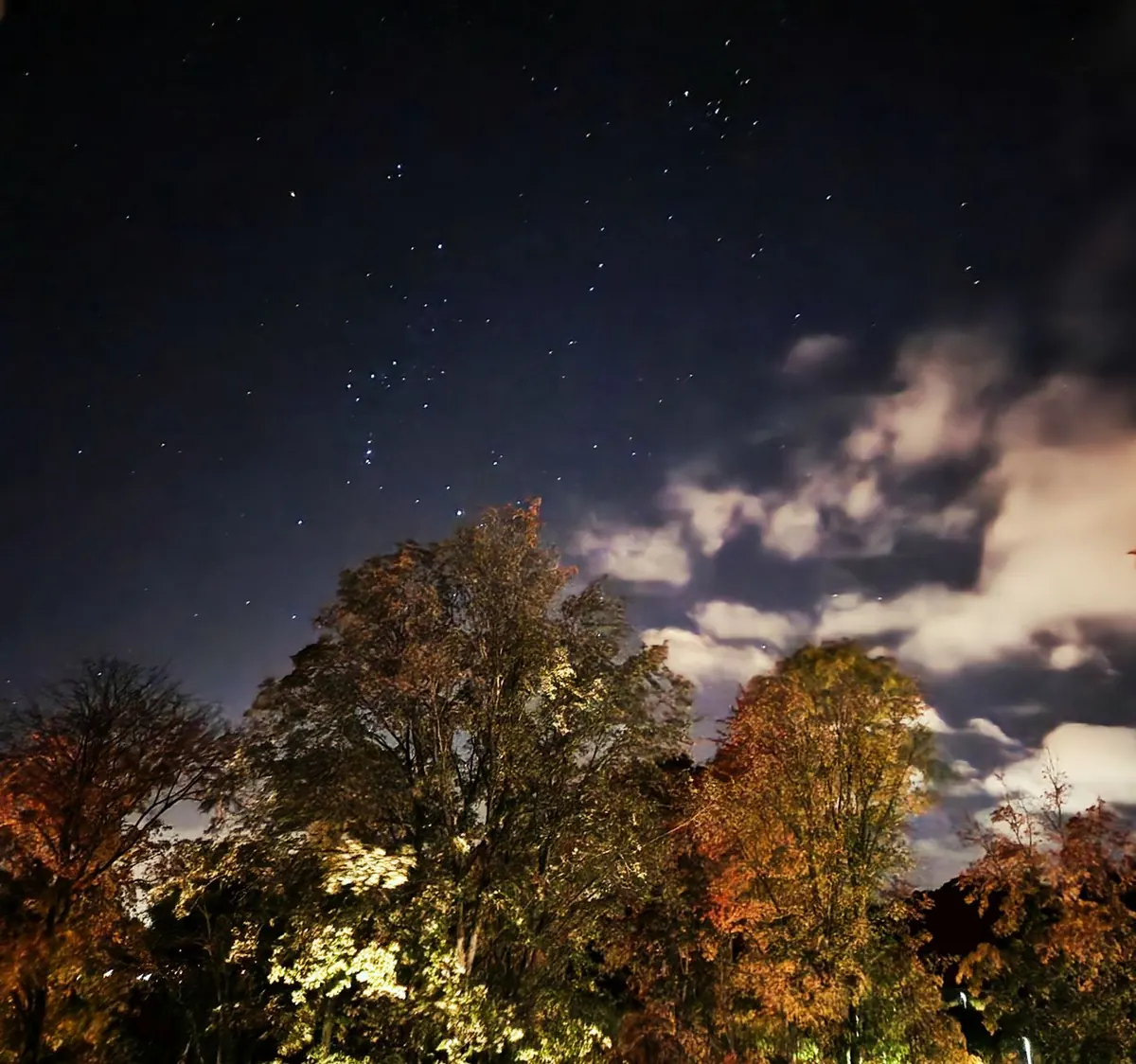
Autumn is the season when the sky seems to arrive early. The air turns crisp, the Milky Way still arcs overhead after dusk, and by midnight some of the most familiar constellations are well placed for a telescope. This checklist is built for those evenings: what to observe, when to catch it, and how to plan a session that feels relaxed rather than rushed.
Plan Around the Moon and the Twilight
Before you choose a target, check two things: the Moon and the end of twilight. A bright Moon is wonderful through a telescope, but it washes out faint galaxies and nebulae. If your main goal is deep-sky observing, aim for the nights around new Moon; if you want planets, double stars or the Moon itself, moonlight matters much less. A first-quarter Moon is especially good for lunar observing because the terminator—the line between light and shadow—throws craters and mountains into sharp relief.
Use a planetarium app or an almanac to see when astronomical twilight ends. In early autumn, the last glow of the Sun can linger, especially at higher latitudes. Set up in daylight if you can, so your finder is aligned and your eyes have time to adapt as the sky darkens. Give yourself twenty to thirty minutes away from white light, use a red flashlight for charts, and dress in more layers than you think you need. A thermos and a small folding table make a surprising difference on a cold night, and a dew shield can keep your optics clear for longer. A slow autumn session is usually a better session.
It also helps to choose one or two “anchor” targets before going out. If the Moon is bright, make the Moon, Jupiter, or a colorful double star the anchor; if the sky is dark, make M31 or a compact globular cluster the anchor. That way, even if clouds interrupt your plan or a target proves difficult, you still leave with a satisfying observation.
Planets: The Bright Anchors of Autumn Evenings
Planets are the easiest entry point for a new observer and a satisfying target for anyone with a small scope. Autumn evenings often bring Saturn and Jupiter into view, depending on the year, while Venus can be a brilliant evening star in some seasons and Mars can grow noticeably bright near opposition. Check a current sky chart before you head out; planetary positions shift from month to month and year to year.
Saturn and Jupiter
Saturn rewards patience. At low power it looks like a pale golden dot; at 100x or more, the rings become unmistakable. Wait for moments of steady seeing, when the planet stops shimmering and the Cassini Division or a shadow on the rings may appear. Jupiter shows a different kind of detail: two dark equatorial belts, occasional festoons, and the four Galilean moons changing position from night to night. Sketch the moons or note their arrangement; it trains your eye. On nights of excellent seeing, try pushing the magnification higher than you normally would. If the image softens, back off; if it sharpens in brief moments, you are seeing the atmosphere settle.
Both planets are bright enough to observe from suburban skies, which makes them ideal when the Moon is up or when you have only a short window between clouds. Give your eye a few minutes on the planet before deciding the seeing is poor. Many nights are average at first and then steady for a handful of seconds at a time.
Venus and Mars
Venus is so bright that it can be spotted before sunset, but it is often low and turbulent. Its phase is the main attraction. Mars needs a decent opposition to show much surface detail, but when it is close, a red filter or simply a steady night can reveal a polar cap and dark markings. Neither planet needs dark skies, so they are ideal targets when the Moon is up. Venus also teaches a useful lesson about expectations: a small, shimmering crescent can be more interesting than a large but mushy disk.
Galaxies and Globular Clusters
Autumn is galaxy season for northern observers. The Great Square of Pegasus is a useful signpost, and from its corner you can star-hop to the Andromeda Galaxy, M31. Start with your lowest-power eyepiece. M31 is large and faint; the bright core is easy, but the dust lane and outer arms need dark skies and averted vision. Look slightly to one side of the galaxy and let it appear rather than staring straight at it. Binoculars can be better than a telescope here, because they show the galaxy’s full extent against the surrounding stars.
The Triangulum Galaxy, M33, is harder. It is a low-surface-brightness object, and many observers need a dark site to see it at all. Treat it as a challenge rather than a first target. Globular clusters are more forgiving. M15 in Pegasus and M2 in Aquarius are compact, bright balls of stars; M13 in Hercules is still visible in early autumn evenings. Use medium to high power once you have found them. A globular cluster that looks like a fuzzy star at low power often begins to resolve into a granular ball at 120x or more.
A short deep-sky checklist
- M31, Andromeda Galaxy — start at Beta Andromedae and star-hop; use low power and averted vision.
- M33, Triangulum Galaxy — dark skies only; expect a faint, diffuse glow rather than a bright spiral.
- M15, Pegasus globular — bright core, resolves at higher power on steady nights.
- M2, Aquarius globular — compact and easy to confirm; a good test for finder alignment.
- M13, Hercules Cluster — catch it early in the season before it sinks into the twilight.
- M11, Wild Duck Cluster — a rich open cluster in Scutum, still worth catching in early autumn.
- Double Cluster, Perseus — two open clusters in one field; a low-power favourite.
Open Clusters, Double Stars, and Nebulae
Open clusters are among the most rewarding autumn objects for small telescopes. The Pleiades, M45, rises late in the evening and is best seen with binoculars or a low-power eyepiece; a telescope can feel too narrow for its full extent. The Double Cluster in Perseus is another wide-field treat. The Owl Cluster, NGC 457, in Cassiopeia, has a playful shape that shows well even from suburban skies. If you are learning to star-hop, these bright clusters are forgiving targets: once you are in the right part of the sky, they often appear in the finder as a obvious misty patch.
Double stars are excellent when the Moon is bright or the seeing is poor. Albireo in Cygnus is a classic colour contrast, gold and blue. Almach in Andromeda and Mizar in the Big Dipper are easy to split and worth returning to. For nebulae, the Dumbbell Nebula, M27, in Vulpecula and the Ring Nebula, M57, in Lyra are bright enough for modest instruments. A narrowband filter can help from light-polluted sites, but try without one first. Filters improve contrast on some nebulae, yet they also dim the view, so start simple and add one only when you know what you are looking for.
Meteor Showers: Orionids, Leonids, Taurids
Autumn brings several meteor showers, though none guarantees a spectacular storm. The Orionids peak around 21–22 October, the Leonids around 17–18 November, and the Taurids run through late October and early November. The Draconids, around 8–9 October, are usually modest but occasionally surprising. Dates shift by a day or so, and the Moon can make or break a session. The Orionids are debris from Halley’s Comet, while the Taurids are known for slower meteors and the occasional bright fireball.
Observing meteors is simple: no telescope, no finder, no power. You need a reclining chair, warm clothing, and a wide view of as much sky as possible. Look about 45 to 90 degrees away from the radiant, because meteors near the radiant are short and less impressive. Give your eyes at least twenty minutes to adapt. A phone screen will undo that adaptation in seconds, so keep it dim and red if you must use it.
How to plan a meteor session
- Check the Moon phase and the shower’s peak night; a bright Moon will hide fainter meteors.
- Choose a dark site with an open horizon and as little local light as possible.
- Bring a reclining chair, blankets, warm drinks, and a red light for notes.
- Look 45 to 90 degrees from the radiant and scan the whole sky rather than staring at one spot.
- Record the time, sky conditions, and number of meteors you see; even a short log makes the next session easier to plan.
Build a Simple Star-Hop Route
A short route keeps you from spending the whole evening hunting. Start at the Great Square of Pegasus and use Alpheratz, Mirach, and Almach in Andromeda as stepping stones. From Mirach, hop upward to M31; from the Great Square, drop down to M15. Then swing over to Cassiopeia and use its familiar W shape to find the Double Cluster in Perseus and the Owl Cluster. This route mixes bright signposts with faint targets, so you can alternate between easy and challenging objects as your eyes adapt.
Write the route down on a small card or keep it on a dim red screen. Include the eyepiece you plan to use for each stop, such as a low-power wide-field eyepiece for M31 and a medium-power eyepiece for M15. The goal is not to see everything in one night; it is to build a repeatable pattern that makes each session more efficient than the last.
A Sample Two-Hour Autumn Session
If you are unsure how to structure an evening, try this simple plan. It leaves room for clouds, cold hands, and the unexpected object that keeps you at the eyepiece longer than planned.
- First 15 minutes: set up, align the finder, and let your eyes begin to adapt.
- Next 20 minutes: observe the Moon or a bright planet while the sky is still brightening or before the Moon becomes overwhelming.
- Next 30 minutes: star-hop to M31 and then try M33 if the sky is dark enough.
- Next 20 minutes: switch to a globular cluster such as M15 or M2 and raise the magnification.
- Next 20 minutes: finish with a double star or open cluster that is easy to find and satisfying to look at.
- Last 15 minutes: make a few notes, check the sky for meteors, and pack up before you get too cold.
Autumn observing is less about racing through a list and more about using the season’s bright anchors to build confidence. A dark sky, a warm layer, and two or three well-chosen targets are often enough to make an evening memorable.
Photo: Damir K / Pexels